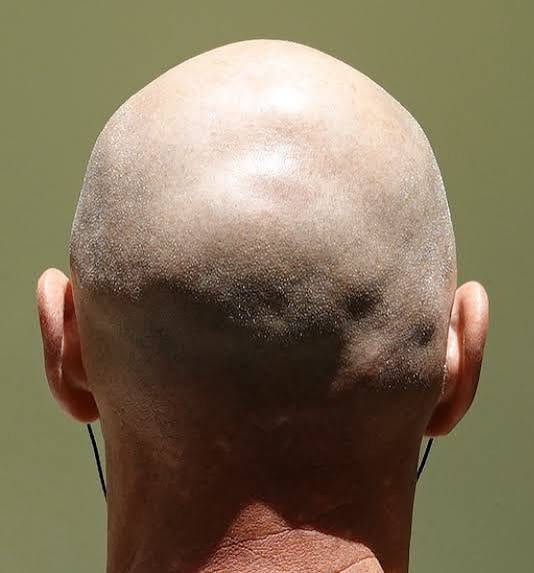
Donor shock loss: temporary thinning after extraction
Some patients shed hair around the extraction sites in the weeks after surgery.
Some patients shed hair around the extraction sites in the weeks after surgery. It is usually temporary and recovers over months, but it is easily confused with permanent depletion — which is why judgement should wait until twelve months.
What is donor shock loss after a hair transplant?
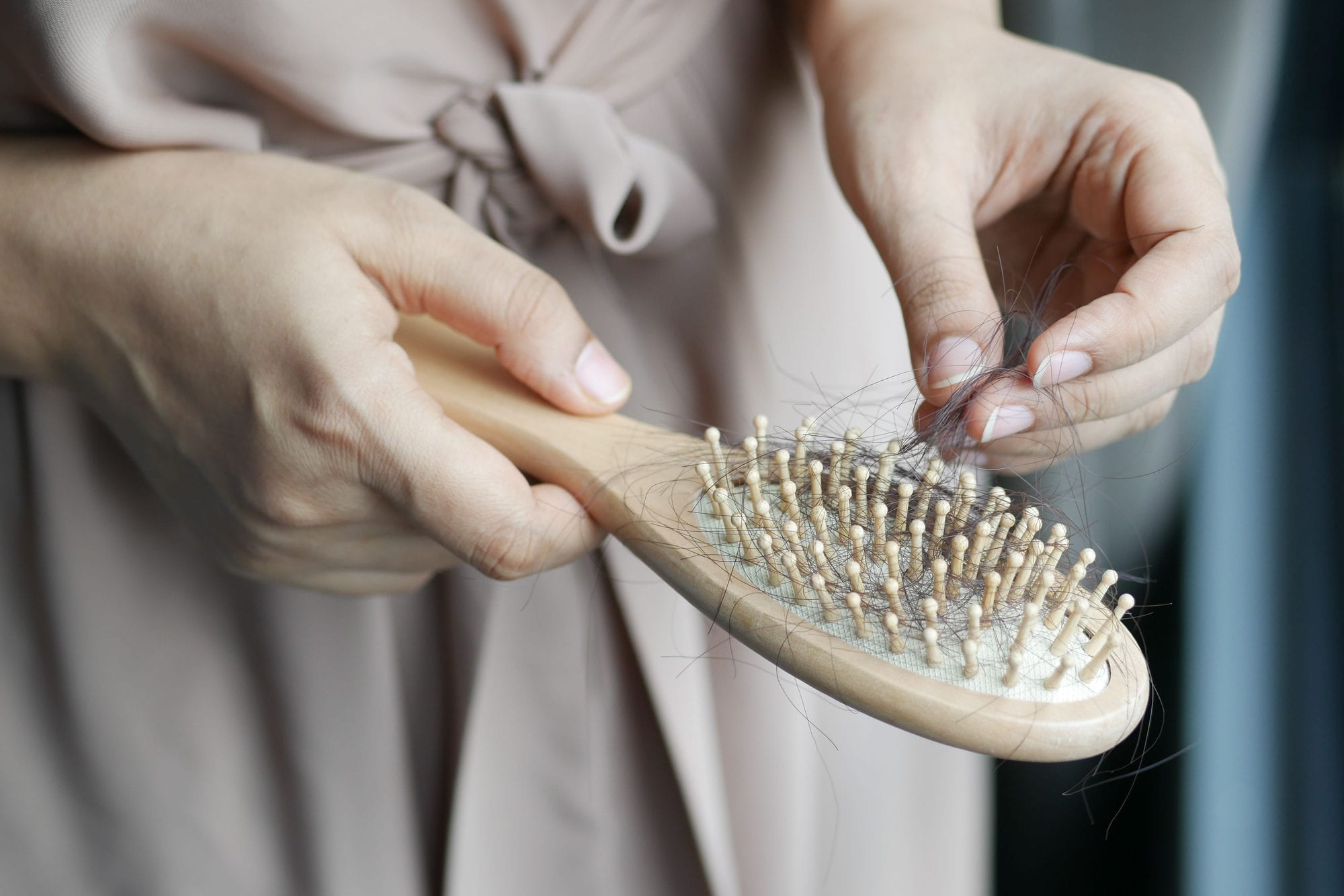
Donor shock loss is temporary shedding of existing hair around extraction sites, triggered by surgical trauma pushing follicles prematurely into a resting phase. The hair shaft falls out, but the follicle is not destroyed and re-enters growth after resting — shedding at weeks two to three, regrowth from months three to four, restored by twelve months.
Shock loss is temporary shedding of existing hair triggered by the trauma of surgery. It is better known in the recipient area, where native hair around newly placed grafts can shed, but it also occurs in the donor area around extraction sites.
The mechanism is that surgical trauma pushes follicles prematurely from their growth phase into a resting phase. The existing hair shaft is released and falls out. The follicle itself is not destroyed, and it re-enters growth after its resting period.
The timing follows the same rough pattern as transplanted hair: shedding at around weeks two to three, regrowth beginning around months three to four, with the picture largely restored by twelve months.
Why does donor shock loss feel so alarming to patients?
Donor shock loss feels alarming because a patient who just paid for hair sees less of it at week four, in an area meant to be reliable. It coincides with recipient-area shedding at weeks two to four, so hair is lost at front and back simultaneously — the low point of the process, and entirely normal.
The appearance is genuinely worrying. A patient who has just paid for surgery to gain hair looks at the back of their head at week four and sees less hair than before the operation, in an area that was supposed to be the reliable part.
It is worse because it arrives at the same time as recipient-area shedding. Weeks two to four after a transplant is when the transplanted hair sheds too, so the patient is losing hair at the front and the back simultaneously. This is the low point of the process and it is entirely normal.
How can I tell donor shock loss apart from permanent donor depletion?
Donor shock loss and true depletion look identical at three months but differ completely: shock loss is shedding from follicles that survive and recovers, while depletion is the permanent absence of extracted follicles and does not. No test separates them early, so judgement about donor damage waits until around twelve months.
Donor shock loss and true donor depletion look identical at three months and are completely different in consequence.
- Shock loss is shedding of hair from follicles that survive. It recovers.
- Depletion is the permanent absence of follicles that were extracted. It does not.
There is no test that separates them early. The only way to tell is to wait and see whether density returns, which is why an honest surgeon will not commit to a judgement about donor damage before around twelve months.
This also means a patient who panics at three months and books a corrective procedure elsewhere is acting on incomplete information.
Who is more likely to experience donor shock loss after a hair transplant?
Patients more likely to experience donor shock loss include those with existing miniaturisation in the donor area (whose follicles are more easily pushed into resting phase and may not fully recover), those undergoing high extraction density or large sessions, those with higher transection rates damaging adjacent follicles, and those with unpredictable individual susceptibility.
- Patients with existing miniaturisation in the donor area. Follicles already under androgenic stress are more easily pushed into resting phase, and there is a further concern: some of these may not fully recover.
- High extraction density. More trauma across the area.
- Large sessions. More total surgical stress and longer procedures.
- Higher transection. Damage to adjacent follicles as well as targeted ones.
- Individual susceptibility, which varies and is not predictable.
What can I do about donor shock loss after a hair transplant?
There is little to do about donor shock loss: wait, since recovery takes months and cannot be accelerated; photograph the area consistently to track recovery; report it to the clinic for documentation; discuss medical therapy with a doctor if donor hair is miniaturising; and do not book further surgery until the twelve-month picture is clear.
Practically, very little, which is not a satisfying answer but is the accurate one.
- Wait. Recovery takes months and cannot be accelerated meaningfully.
- Photograph it at consistent length and lighting so recovery can actually be assessed rather than guessed at.
- Report it to the clinic so it is documented, and so they can look at it.
- Discuss medical therapy with a doctor. Where donor hair is miniaturising, treatment addresses the underlying process, though this is a decision for a doctor who knows your history rather than something to start on forum advice.
- Do not book further surgery until the twelve-month picture is clear.
What should I ask my surgeon about donor shock loss before hair transplant surgery?
The most useful intervention is being told in advance that donor shedding can happen. Patients who know it is a recognised temporary phenomenon experience it as unpleasant, while those not told see it as evidence something went wrong. Ask at consultation whether temporary donor loss is possible and what recovery looks like.
Temporary shedding is a normal part of the sequence set out in our aftercare guide.
Sources
- Romera de Blas C, Vega Díez D, Ricart Vayá JM, Gómez Zubiaur A. Complications in follicular unit excision hair transplantation: current evidence and practical approaches. Frontiers in Medicine, 2026;13:1750989. pubmed.ncbi.nlm.nih.gov/41709896
- Fan Z, Gan Y, Qu Q, Wang J, Lunan Y, Liu B, Chen R, Hu Z, Miao Y. The effect of hyperbaric oxygen therapy combined with hair transplantation surgery for the treatment of alopecia. Journal of Cosmetic Dermatology, 2021;20(3):917-921. pubmed.ncbi.nlm.nih.gov/32770782
- Bernstein RM, Rassman WR. Graft Anchoring in Hair Transplantation. Dermatologic Surgery, 2006;32(2):198-204. pubmed.ncbi.nlm.nih.gov/16442039
- Xu Y, et al. Case Report: Paired vertex-occipital assessment reveals donor-area involvement in diffuse unpatterned alopecia. Frontiers in Medicine, 2026;13:1797275. pubmed.ncbi.nlm.nih.gov/41982548
- Parsley WM, Perez-Meza D. Review of factors affecting the growth and survival of follicular grafts. Journal of Cutaneous and Aesthetic Surgery, 2010;3(2). jcasonline.com
This article summarises published research and standard clinical practice. It is general educational information, not medical advice, and it does not replace the instructions your own surgical team gives you. Where their guidance differs from anything here, follow theirs.
Get a no-obligation assessment against fixed criteria, directly on WhatsApp.