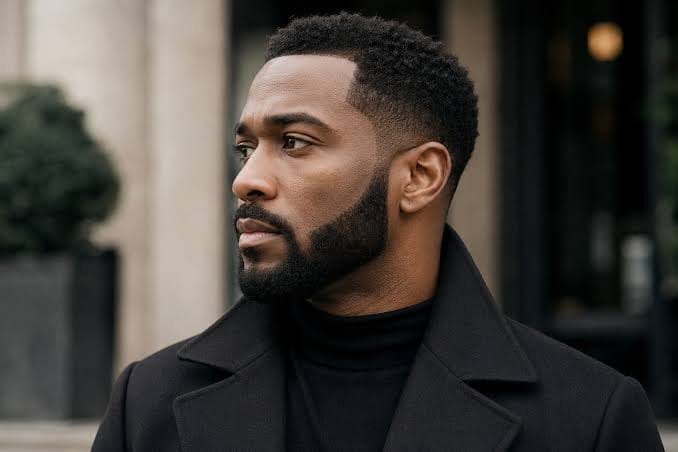
FUE for beard restoration
Beard restoration moves scalp hair into the face, usually as single grafts placed at flat angles.
Beard restoration moves scalp hair into the face, usually as single grafts placed at flat angles. It works well, but the transplanted hair keeps scalp characteristics, and donor supply spent on the beard is no longer available for the scalp.
How is a beard transplant done?
A beard transplant takes grafts from the scalp donor area, typically the lower occipital region where hair is finer, placed into the beard at very shallow angles pointing downward and outward. Numbers vary widely with the goal: filling patches may take a few hundred grafts, a full beard from sparse growth well over two thousand.
What does a beard transplant do well?
Beard transplant works well for a specific set of tasks: filling patchy areas and scars, thickening a sparse jawline or cheek line, rebuilding hair lost to burns or facial trauma, and defining a cleaner, more consistent beard line along the jaw and cheeks.
- Filling patchy areas and scars
- Thickening a sparse jawline or cheek line
- Rebuilding after burns or trauma
- Defining a beard line
What are the trade-offs of a beard transplant?
The trade-offs include permanent donor cost, since every graft used on the beard is unavailable for the scalp; altered hair character, as transplanted hair often behaves like scalp hair, growing longer, straighter and finer than native beard hair; lower density than a naturally full beard; and recognised risks of ingrown hairs and folliculitis.
- Donor cost. Every graft used on the face is unavailable for the scalp, permanently. For anyone with progressing scalp loss this is the central question.
- Hair character. Scalp hair in the beard often behaves like scalp hair: it may grow longer, straighter and finer than native beard hair.
- Density limits. A transplanted beard is usually less dense than a naturally full one.
- Ingrown hairs and folliculitis are recognised risks in the facial skin.
What's the healing timeline for a beard transplant?
Facial extraction and recipient sites generally heal quickly, with crusting clearing in the first week to ten days. The growth timeline then follows the usual course: early shedding, regrowth from around months three to four, and a settled result at about twelve months.
Our beard transplant guide covers planning and expectations.
Sources
- Parsley WM, Perez-Meza D. Review of factors affecting the growth and survival of follicular grafts. Journal of Cutaneous and Aesthetic Surgery, 2010;3(2). jcasonline.com
This article summarises published research and standard clinical practice. It is general educational information, not medical advice, and it does not replace the instructions your own surgical team gives you. Where their guidance differs from anything here, follow theirs.
Get a no-obligation assessment against fixed criteria, directly on WhatsApp.