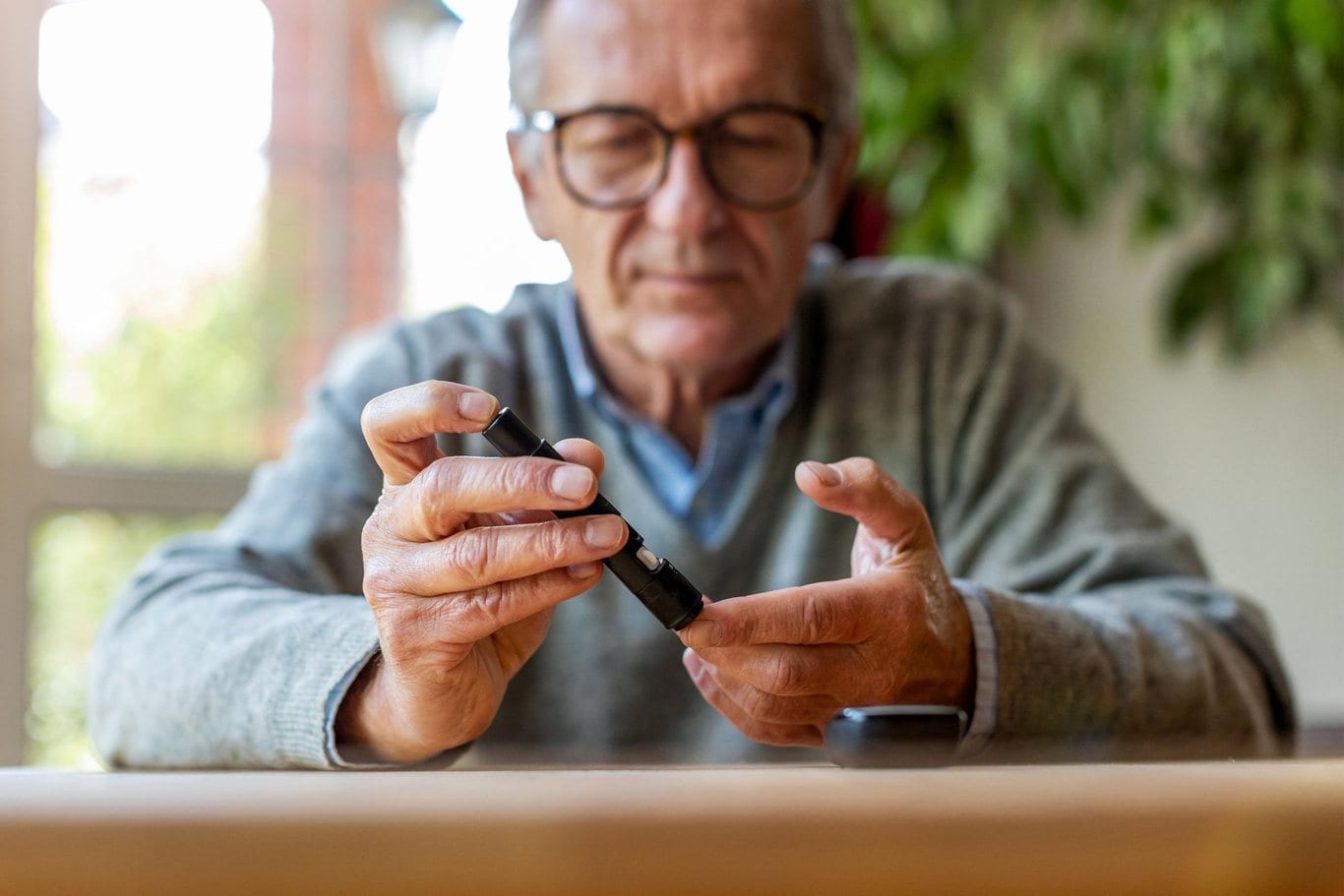
Healing in diabetic patients
Diabetes is not a bar to hair transplantation, but it changes the assessment.
Diabetes is not a bar to hair transplantation, but it changes the assessment. Well-controlled diabetes is generally compatible with surgery; poorly controlled diabetes impairs wound healing and raises infection risk, and control rather than diagnosis is what matters.
Why does diabetes matter for hair transplant healing?
Sustained high blood glucose impairs immune function, small-vessel circulation and the tissue repair process itself, the same systems a healing scalp depends on. The clinical distinction is between well-controlled and poorly controlled diabetes: a person with good control is usually a candidate, while one without it needs the control addressed first.
What should a clinic ask a diabetic patient before hair transplant surgery?

A clinic should ask about the type of diabetes and how long you have had it, current control including recent HbA1c, medications including anything affecting bleeding, complications such as neuropathy or circulatory problems, and who manages your diabetes and whether they have been consulted. A clinic that skips these questions is not assessing you properly.
- Type of diabetes and how long you have had it
- Current control, including recent HbA1c
- Medications, including anything affecting bleeding
- Complications, particularly neuropathy or circulatory problems
- Who manages your diabetes and whether they have been consulted
A clinic that does not ask these before operating is not assessing you properly. Our page on hair transplantation with medical conditions covers this in more detail.
What practical adjustments does surgery require for diabetic patients?
A long procedure disrupts normal meal and medication timing, which needs planning, and fasting instructions must be reconciled with glucose management. Slower healing may extend the usual recovery timelines, infection risk warrants a lower threshold for reporting symptoms, and follow-up appointments may need to be scheduled more closely than usual.
- A long procedure disrupts normal meal and medication timing, which needs planning
- Fasting instructions must be reconciled with glucose management
- Slower healing may extend the usual timelines
- Infection risk warrants a lower threshold for reporting symptoms
- Follow-up may need to be closer
Can diabetes itself cause hair loss that gets mistaken for pattern baldness?
Yes: diabetes and thyroid disease can themselves contribute to hair loss, so establishing the correct diagnosis before attributing it to pattern baldness matters. Transplanting into hair loss that actually has a treatable medical cause only addresses the visible symptom, not the underlying problem causing it.
Sources
- Bernstein RM, Rassman WR. Graft Anchoring in Hair Transplantation. Dermatologic Surgery, 2006;32(2):198-204. pubmed.ncbi.nlm.nih.gov/16442039
This article summarises published research and standard clinical practice. It is general educational information, not medical advice, and it does not replace the instructions your own surgical team gives you. Where their guidance differs from anything here, follow theirs.
Get a no-obligation assessment against fixed criteria, directly on WhatsApp.