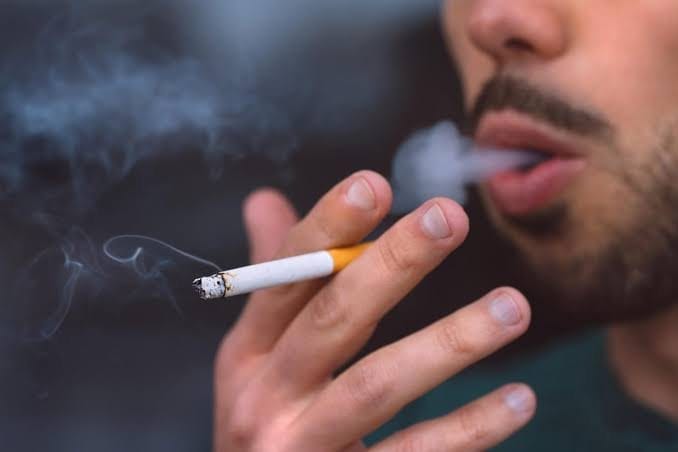
Smoking and delayed wound healing
Smoking impairs wound healing through well-established mechanisms: nicotine constricts small blood vessels and carbon monoxide reduces the oxygen the blood can carry.
Smoking impairs wound healing through well-established mechanisms: nicotine constricts small blood vessels and carbon monoxide reduces the oxygen the blood can carry. Both act directly against the blood supply a newly placed graft depends on, which is why clinics ask patients to stop around surgery.
Why does smoking reduce oxygen supply to a transplanted hair graft?
A transplanted follicle has no blood supply of its own until the scalp builds one, so early survival depends entirely on the recipient area delivering oxygen and nutrients. Nicotine constricts the small blood vessels involved, while carbon monoxide binds haemoglobin ahead of oxygen, and together they reduce oxygen availability at the graft.
Why do clinics ask patients to stop smoking before surgery, not just after?
Stopping only after surgery misses the period when recipient sites are created and grafts are placed, so clinics commonly ask for cessation both before the procedure and afterwards, though exact windows vary by surgeon. Ask your own clinic for its figure and be honest about actual consumption so it can plan around you.
Are vaping and nicotine replacement safe alternatives to smoking before a hair transplant?
No, the vasoconstrictive effect that impairs healing comes from nicotine itself, so nicotine-containing vapes, patches and gum are not automatically neutral, even though they avoid the carbon monoxide produced by combustion. This is worth raising explicitly with your surgeon rather than assuming a substitute is exempt from the same restrictions.
What does general surgical research say about smoking and wound healing?
Impaired wound healing in smokers is a long-standing finding in general surgery, affecting both infection rates and wound breakdown. It isn't specific to hair transplantation, but the underlying mechanism applies with unusual directness to a procedure whose success depends on microvascular ingrowth into the transplanted grafts.
Ask your clinic for its own window, and read it alongside the wider aftercare guidance.
Sources
- Bernstein RM, Rassman WR. Graft Anchoring in Hair Transplantation. Dermatologic Surgery, 2006;32(2):198-204. pubmed.ncbi.nlm.nih.gov/16442039
This article summarises published research and standard clinical practice. It is general educational information, not medical advice, and it does not replace the instructions your own surgical team gives you. Where their guidance differs from anything here, follow theirs.
Get a no-obligation assessment against fixed criteria, directly on WhatsApp.