How to reduce post-op swelling
Most post-op swelling is gravity at work, which is why posture does more for it than any product.
Post-operative swelling is fluid tracking downward from the scalp under gravity, so the measures that reduce it are the ones that work with gravity: staying upright, sleeping elevated, and cooling the forehead rather than the grafts.
Why does gravity cause post-transplant swelling?
Post-transplant swelling follows gravity: local anaesthetic and the fluid used to firm tissue for graft placement add volume to the scalp, which is bound tightly to the skull and cannot hold it, so the fluid migrates downward into the looser tissue of the forehead and eyelids. That is why posture matters more than any product.
Which measures reduce swelling after a hair transplant?
Five measures reduce post-transplant swelling: sleeping elevated for three to five nights, staying upright and gently active during the day, cooling the forehead only (never the grafts) with a cold pack, taking any prescribed medication such as a short steroid course, and drinking enough water while going easy on salt.
- Sleep elevated. Head raised on pillows or in a recliner for the first several nights, typically three to five.
- Stay upright in the day. Sitting and gentle walking beat lying down.
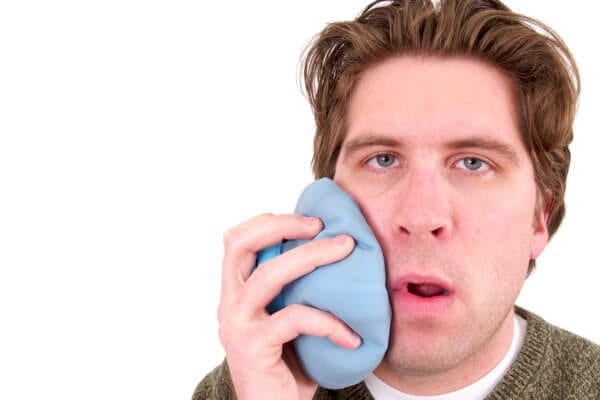
- Cool the forehead only. A cold pack above the brows and across the forehead, never on the grafts.
- Take prescribed medication as directed. Some clinics give a short steroid course specifically to limit swelling.
- Keep hydrated and go easy on salt in the first days.
What should you avoid when trying to reduce post-transplant swelling?
Massaging swelling does not drain it and risks the grafts; vigorous exercise raises blood pressure and worsens swelling in the first week; and alcohol, a vasodilator, is best avoided while swelling is active. The most common mistake is icing the recipient area directly, which pressures and wets grafts during the window they can still be dislodged.
What swelling symptoms after a hair transplant need medical attention?
Contact your clinic if swelling is on one side only, is hot, red and tender, starts after the first week or worsens after improving, or comes with fever. Any difficulty breathing or swallowing alongside swelling is an emergency and needs immediate medical attention, not a wait-and-see approach.
- Swelling on one side only
- Swelling that is hot, red and tender
- Swelling that starts after the first week or worsens having improved
- Swelling with fever
- Any difficulty breathing or swallowing, which is an emergency
Swelling is one stage of a longer recovery; the aftercare guide follows the rest of it.
Sources
- Bernstein RM, Rassman WR. Graft Anchoring in Hair Transplantation. Dermatologic Surgery, 2006;32(2):198-204. pubmed.ncbi.nlm.nih.gov/16442039
This article summarises published research and standard clinical practice. It is general educational information, not medical advice, and it does not replace the instructions your own surgical team gives you. Where their guidance differs from anything here, follow theirs.
Get a no-obligation assessment against fixed criteria, directly on WhatsApp.