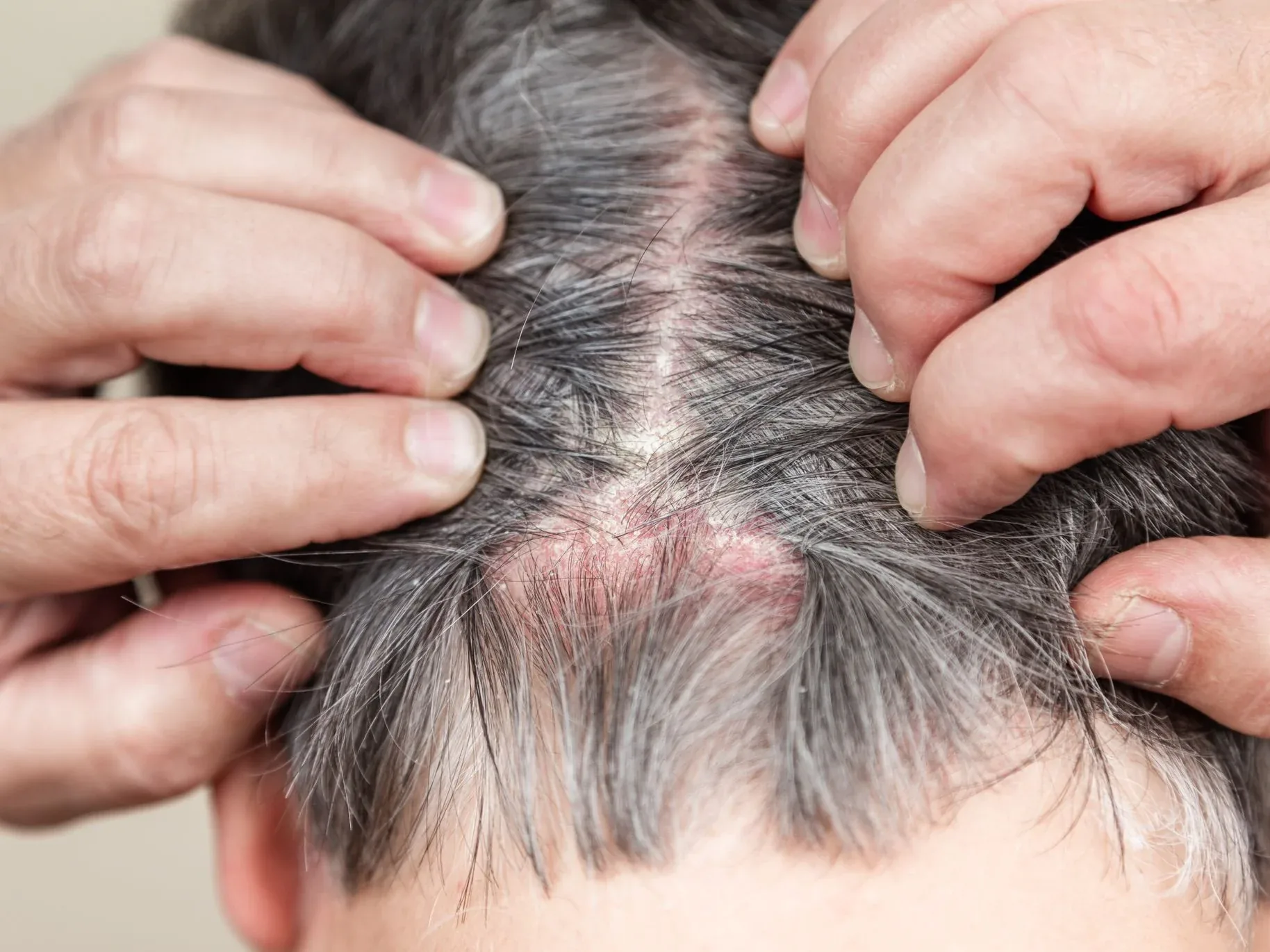
Itching after FUE: causes and relief
The itch usually means the skin is healing. Scratching it is what puts grafts at risk.
Itching in the second and third weeks after a transplant is common and is usually a sign of ordinary wound healing and dryness rather than a problem. The risk lies in the scratching, which can disturb grafts while they are still vulnerable.
Why does the scalp itch after a hair transplant?
Itching results from several processes converging: healing skin releases mediators that provoke itch, crusts pull on the skin as they dry and release, the scalp is unusually dry because normal washing and oils are suspended, and regrowing hair shafts push through the surface. The donor area often itches as much as the recipient area.
What helps relieve itching after a hair transplant?
Keeping the scalp moist with saline spray or whatever your clinic prescribed is the single most effective measure. Gentle washing on schedule reduces flaking, and with it the itch; tapping with flat fingertips instead of scratching is fine once the grafts are anchored; and a cool room helps, because heat and sweat make itching worse.
- Keep the scalp moist. Saline spray, or whatever your clinic prescribed, is the most effective single measure.
- Resume gentle washing on schedule. Cleansing reduces flaking, which reduces itch.
- Tap rather than scratch if you must respond to it, using flat fingertips, and only once the grafts are anchored.
- Keep the room cool. Heat and sweat make it worse.
- Ask about an antihistamine rather than taking one automatically, since your clinic may already have you on other medication.
What should you avoid when your scalp itches after a transplant?
Four things to avoid during the itchy phase: scratching with fingernails; medicated or anti-dandruff shampoos not cleared by your clinic; tea tree and other essential oils on healing skin; and any product applied to the recipient area without asking your clinic first.
When is itching after a hair transplant a sign of a problem?
Itching is a symptom rather than a nuisance when it comes with pus, spreading redness or a bump around a graft; when it is severe enough to prevent sleep beyond the first fortnight; when it starts late, weeks after everything had settled; or when widespread flaking appears with an inflamed base, which can indicate dermatitis.
- Itch with pus, spreading redness or a bump around a graft
- Itch severe enough to prevent sleep beyond the first fortnight
- Itch that starts late, weeks after everything had settled
- Widespread flaking with an inflamed base, which can indicate dermatitis needing treatment
Resist scratching, and keep to the washing and moisture routine described under aftercare.
Sources
- Bernstein RM, Rassman WR. Graft Anchoring in Hair Transplantation. Dermatologic Surgery, 2006;32(2):198-204. pubmed.ncbi.nlm.nih.gov/16442039
This article summarises published research and standard clinical practice. It is general educational information, not medical advice, and it does not replace the instructions your own surgical team gives you. Where their guidance differs from anything here, follow theirs.
Get a no-obligation assessment against fixed criteria, directly on WhatsApp.