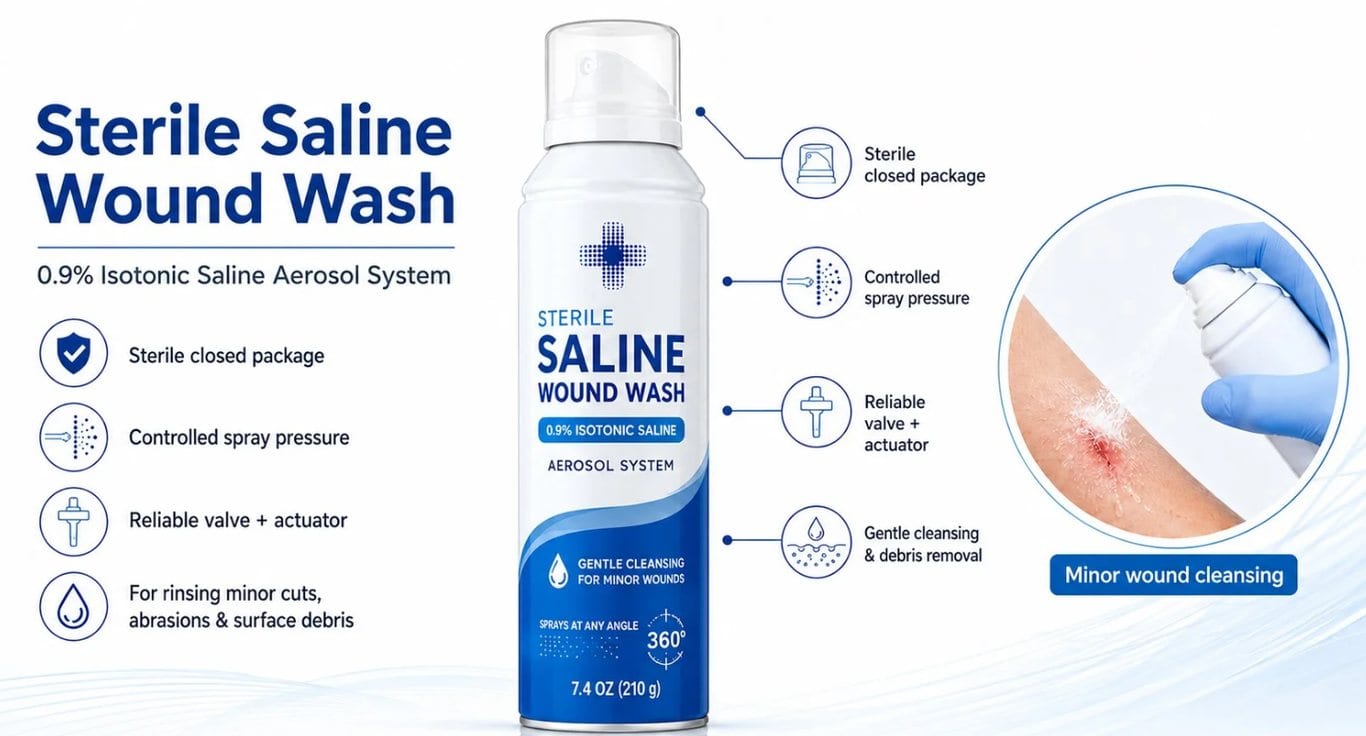
Saline spray protocols and why they matter
Frequent light misting in the first days keeps crusts soft enough to let go of the grafts on their own.
Saline spray keeps the recipient area moist between washes in the days after surgery. Moist crusts stay soft and release on their own; dry crusts harden onto the graft and become the mechanism by which grafts are pulled out.
What is saline spray for after a hair transplant?
Sterile saline is salt water at the concentration of body fluid. It does not speed healing directly; its job is moisture. Keeping the recipient area moist stops crusts from hardening, and that matters because a soft crust releases on its own while a hard one must be pulled off, risking the graft.
What does a typical saline spray protocol look like?
Protocols vary by clinic, but a common pattern is frequent light misting for the first two to three days, tapering as crusts begin to release. Mist from a distance rather than spraying directly, cover the area evenly without soaking it, let it air dry without wiping, and continue until your clinic says crusting has cleared.
Protocols differ between clinics and yours takes precedence. A common pattern is frequent light misting through the first two to three days, tapering as crusts begin to release.
- Hold the bottle far enough away to mist rather than jet
- Cover the recipient area evenly; do not soak it
- Do not wipe or blot afterwards; let it dry
- Continue until your clinic says to stop, usually once crusting has cleared
Why is dehydration a concern for healing grafts?
Research on graft survival found that follicular grafts left dry outside the body began dying within minutes rather than hours. That finding concerns grafts during surgery, not already-implanted ones, so it does not transfer directly, but the general principle holds: healing tissue does better moist than dry, which is why clinics insist on keeping crusts soft.
What should you not substitute for saline spray?
Do not substitute tap water, which is not sterile, for saline. Homemade salt solutions have uncontrolled concentration, so avoid making your own. Also avoid anything containing alcohol, fragrance or essential oils, and do not use moisturisers or gels unless your clinic has specifically cleared them for the recipient area.
- Tap water, which is not sterile
- Homemade salt solutions at uncontrolled concentration
- Anything containing alcohol, fragrance or essential oils
- Moisturisers or gels not cleared by your clinic
Saline spray is one part of a wider post-operative routine, set out in full under aftercare.
Sources
- Bernstein RM, Rassman WR. Graft Anchoring in Hair Transplantation. Dermatologic Surgery, 2006;32(2):198-204. pubmed.ncbi.nlm.nih.gov/16442039
- Parsley WM, Perez-Meza D. Review of factors affecting the growth and survival of follicular grafts. Journal of Cutaneous and Aesthetic Surgery, 2010;3(2). jcasonline.com
This article summarises published research and standard clinical practice. It is general educational information, not medical advice, and it does not replace the instructions your own surgical team gives you. Where their guidance differs from anything here, follow theirs.
Get a no-obligation assessment against fixed criteria, directly on WhatsApp.