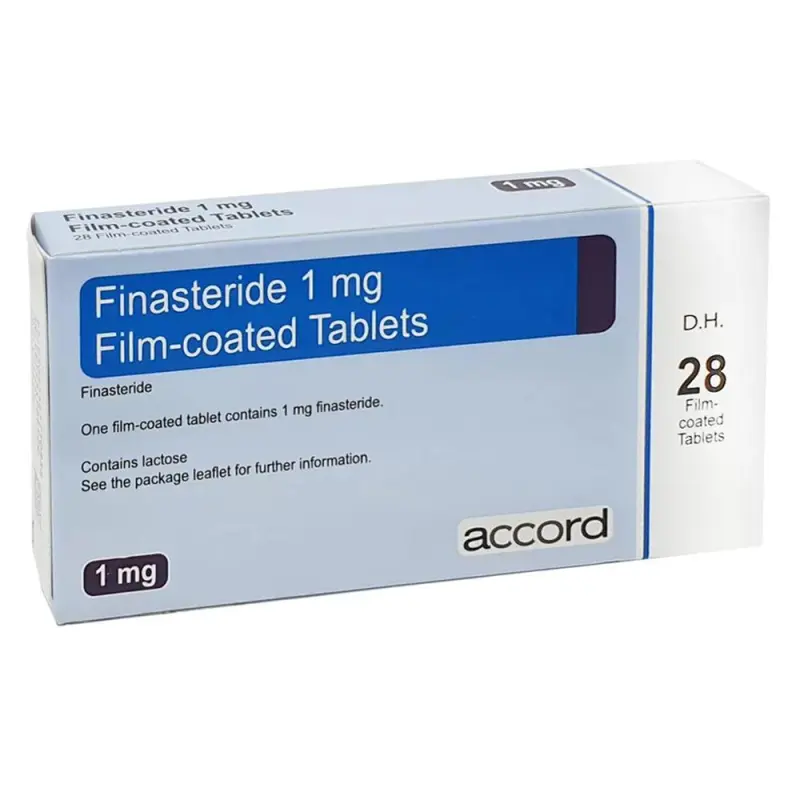
Finasteride sexual side effects: what the data says
Sexual side effects are the most discussed aspect of Finasteride.
Sexual side effects are the most discussed aspect of Finasteride. Trial data report them in a small minority, generally a low single-digit percentage with a substantial placebo response, while a contested debate continues about persistent symptoms after stopping.
What did the Finasteride registration trials report about sexual side effects?
The registration studies recorded sexual adverse effects, including decreased libido, erectile dysfunction and ejaculation disorders, at low single-digit percentages, with only a small difference over placebo. A striking feature is how much is also reported in placebo arms, showing expectation contributes substantially to what gets recorded, though that does not mean the symptoms are imagined.
Do Finasteride's sexual side effects persist after stopping the drug?
Whether a minority of men experience symptoms that continue after stopping, discussed as post-Finasteride syndrome, is genuinely unresolved. Reported cases exist and regulators in several countries have updated labelling, but causation, incidence and mechanism are not established. Overall, the risk is not zero, is not well quantified, and appears to affect a small minority.
The contested question is whether a minority of men experience symptoms that continue after stopping. This is discussed as post-Finasteride syndrome.
It is genuinely unresolved. Reported cases exist and regulators in several countries have updated labelling to reflect reports of persistent symptoms. What is not established is causation, incidence, or mechanism, and study designs to settle it are difficult.
The honest position is that the risk is not zero, is not well quantified, and appears to affect a small minority. Anyone telling you it is definitely nothing, or definitely common, is going beyond the evidence.
How does Finasteride's sexual side-effect profile compare with Dutasteride's?
A meta-analysis comparing Dutasteride with Finasteride found no significant difference between them in altered libido, erectile dysfunction or ejaculation disorders. The main practical distinction is that Dutasteride's much longer half-life means any side effect that does occur takes longer to clear once you stop taking it.
How should someone weigh the decision to take Finasteride?
Discuss it with a prescriber rather than an internet forum, report symptoms early, and consider whether a lower-exposure topical formulation suits you. Weigh it against what untreated hair loss means to you, since both are real considerations, and treat fathering children as a separate discussion, because these drugs affect a developing male fetus.
- Discuss it with a prescriber rather than an internet forum, in both directions
- Report symptoms early rather than persisting silently
- Consider whether topical formulations, with lower systemic exposure, are appropriate for you
- Weigh it against what untreated loss means to you; both are real considerations
- Fathering children is a separate discussion, since these drugs affect a developing male fetus
The alternatives, if you decide against it, are in our guide to non-surgical treatment.
Sources
- Kaufman KD, et al. Finasteride in the treatment of men with androgenetic alopecia. Finasteride Male Pattern Hair Loss Study Group. Journal of the American Academy of Dermatology, 1998. pubmed.ncbi.nlm.nih.gov/9777765
- Gupta AK, Venkataraman M, Talukder M, Bamimore MA. Finasteride for hair loss: a review. Journal of Dermatological Treatment, 2022;33(4):1938-1946. pubmed.ncbi.nlm.nih.gov/34291720
- Zhou Z, et al. The efficacy and safety of Dutasteride compared with Finasteride in treating men with androgenetic alopecia: a systematic review and meta-analysis. Clinical Interventions in Aging, 2019. pubmed.ncbi.nlm.nih.gov/30863034
This article summarises published research. It is general educational information, not medical advice, and it is not a recommendation to start, stop or change any medication. Prescription drugs carry contraindications and interactions; discuss them with a doctor who knows your medical history.
Get a no-obligation assessment against fixed criteria, directly on WhatsApp.