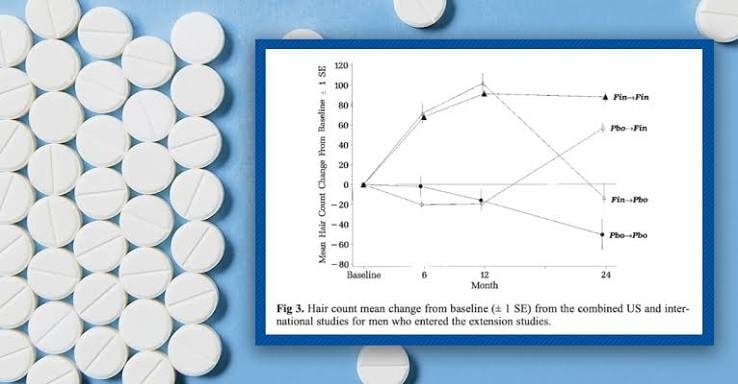
What happens when you stop Finasteride
DHT returns to its previous level within weeks of stopping, and the hair the drug was protecting resumes its original trajectory.
DHT returns to its previous level within weeks of stopping, and the hair the drug was protecting resumes its original trajectory. Gains are generally lost over roughly the following year, returning you to where you would have been untreated.
What happens physiologically when you stop taking Finasteride?
Finasteride works through continuous suppression of 5-alpha reductase, and because it has a relatively short half-life, DHT levels return toward baseline within weeks of the last dose. Once DHT is back, susceptible follicles resume miniaturising on the same schedule they followed before treatment began.
What is the timeline of hair loss after stopping Finasteride?
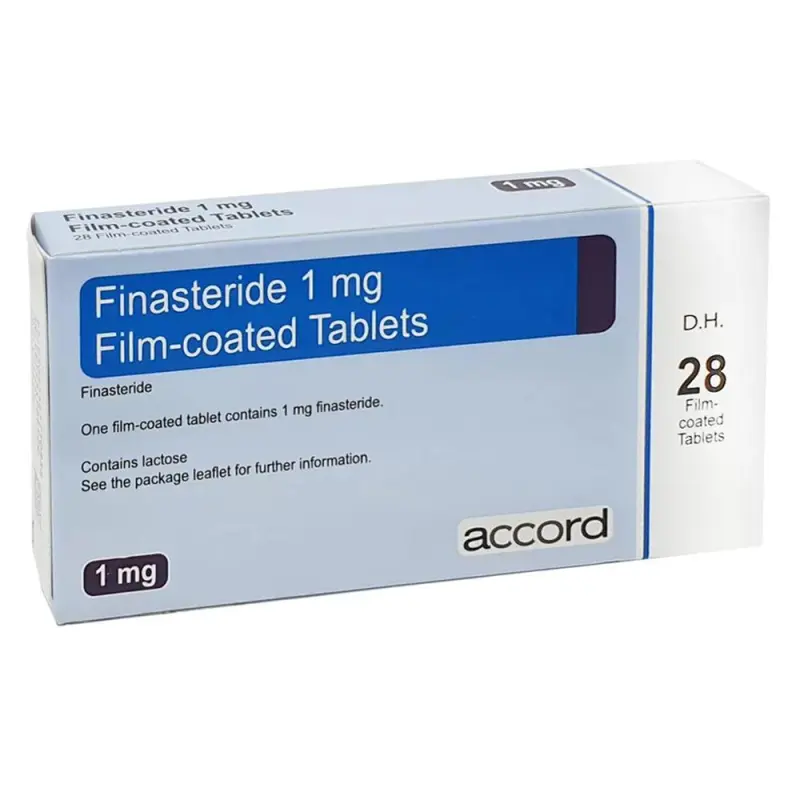
After stopping Finasteride, DHT returns to baseline within weeks 1 to 4 with no visible change yet; shedding increases between months 3 and 6 as follicles cycle; gains are progressively lost from months 6 to 12; and after about 12 months hair approximates where it would have been without treatment.
- Weeks 1 to 4: DHT returns to baseline; no visible change yet
- Months 3 to 6: shedding increases as follicles cycle
- Months 6 to 12: gains are progressively lost
- After about 12 months: hair approximates where it would have been without treatment
Does stopping Finasteride cause accelerated hair loss worse than being untreated?
Stopping Finasteride is often mistaken for causing accelerated loss, but five-year data show placebo groups losing hair progressively while treated groups kept their improvement. Stopping simply lets the deferred loss arrive; because it happens over months rather than years it feels rapid, but the end point is only the untreated trajectory.
Why does stopping Finasteride matter for hair transplant planning?
Stopping Finasteride matters for anyone who has had or is planning a transplant, because a hairline designed assuming continued medication looks different if native hair behind it resumes thinning. Decide before surgery whether you will continue treatment indefinitely, since that answer changes how conservatively the design should be drawn.
Our article on combining medication with a transplant covers this.
Sources
- Kaufman KD, et al. Finasteride in the treatment of men with androgenetic alopecia. Finasteride Male Pattern Hair Loss Study Group. Journal of the American Academy of Dermatology, 1998. pubmed.ncbi.nlm.nih.gov/9777765
- Long-term (5-year) multinational experience with Finasteride 1 mg in the treatment of men with androgenetic alopecia. European Journal of Dermatology, 2002. pubmed.ncbi.nlm.nih.gov/11809594
- Gupta AK, Venkataraman M, Talukder M, Bamimore MA. Finasteride for hair loss: a review. Journal of Dermatological Treatment, 2022;33(4):1938-1946. pubmed.ncbi.nlm.nih.gov/34291720
This article summarises published research. It is general educational information, not medical advice, and it is not a recommendation to start, stop or change any medication. Prescription drugs carry contraindications and interactions; discuss them with a doctor who knows your medical history.
Get a no-obligation assessment against fixed criteria, directly on WhatsApp.