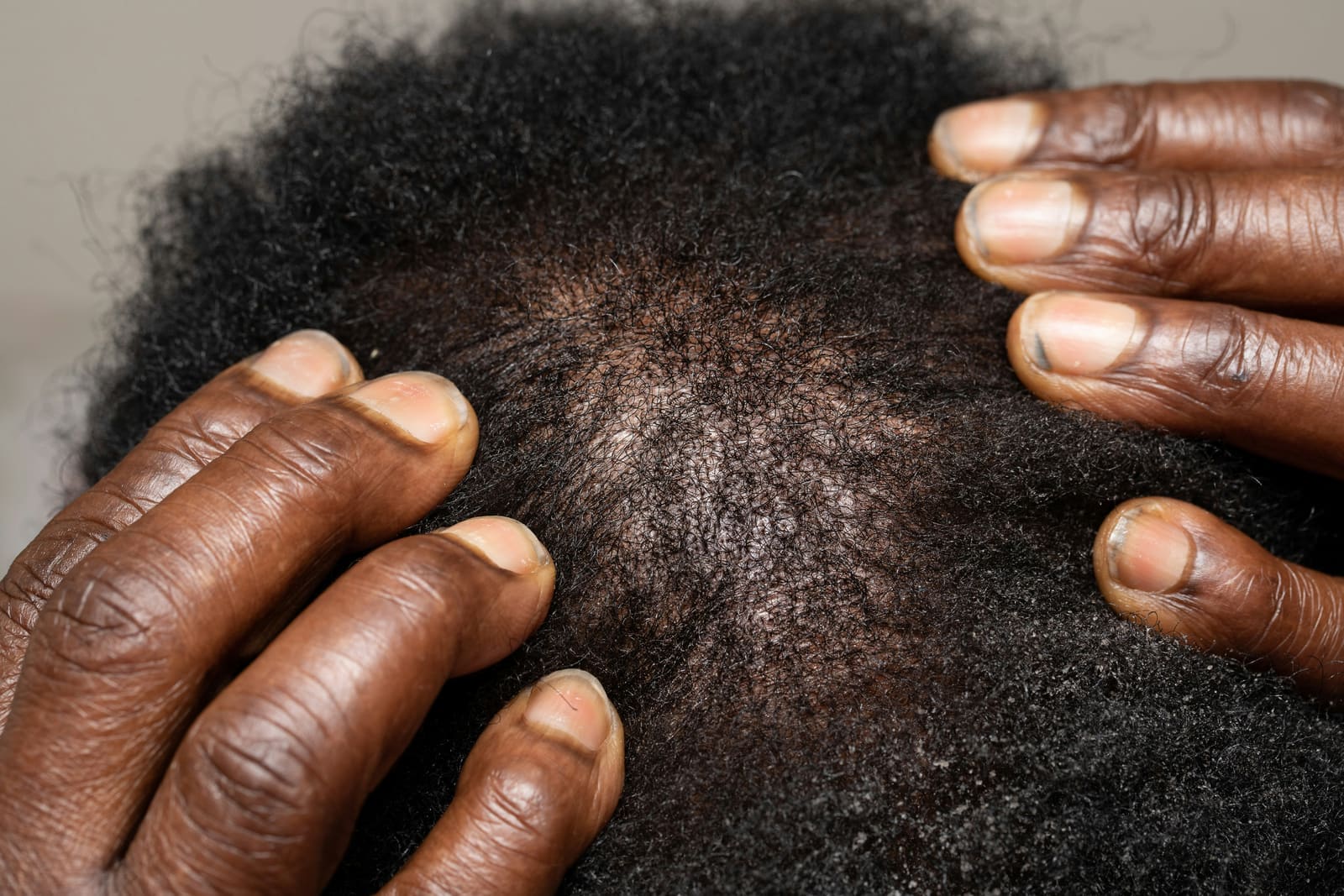
When to actually contact your clinic during healing
Most post-operative worry concerns things that are entirely normal.
Most post-operative worry concerns things that are entirely normal. A short list of genuine warning signs separates the events worth an urgent call from the ones worth photographing and mentioning at the next check.
When should you contact your clinic urgently after a hair transplant?
Contact your clinic promptly for fever, pain that increases rather than decreases, spreading redness or heat, pus or returning crusting, a firm and growing one-sided swelling that could be a haematoma, bleeding that will not stop after ten minutes of light pressure, sudden loss of several grafts, or any pale, dusky or separating wound edge.
- Fever.
- Increasing pain rather than steadily decreasing pain.
- Spreading redness, heat, or redness advancing beyond the surgical area.
- Pus, or crusting that returns after the area had cleared.
- A firm, growing, one-sided swelling, which can indicate a haematoma.
- Bleeding that does not stop with ten minutes of light, clean pressure.
- Sudden loss of several grafts, particularly in the first week.
- Any wound edge that looks pale, dusky or is separating.
What symptoms after a hair transplant are worth mentioning but not urgent?
These symptoms are worth noting but are not urgent: a single graft lost to a snagged crust, itching in weeks two and three, numbness in the donor area, uneven shedding of transplanted hairs, isolated spots appearing weeks later, redness fading unevenly, and a result that feels worse around month three.
- A single graft lost to a snagged crust
- Itching in weeks two and three
- Numbness in the donor area
- Uneven shedding of transplanted hairs
- Isolated spots appearing weeks later
- Redness that is fading unevenly
- Feeling that the result looks worse at month three
What symptoms after a hair transplant are almost always normal?
Common and normal changes include crusts forming in the first days and shedding by days seven to fourteen, forehead swelling on days two to four, transplanted-hair shedding in weeks two to six, pink recipient skin for weeks to months, donor tightness after strip surgery, and a dip in appearance around months two to four.
- Crusts forming in the first days and shedding between days seven and fourteen
- Forehead swelling on days two to four
- Shedding of transplanted hairs in weeks two to six
- Pink recipient skin for weeks to months
- Donor tightness after strip surgery in the first weeks
- A dip in appearance around months two to four
How do you make contact with your clinic as useful as possible?
Make contact useful by photographing the issue in good, consistent light, noting when it started and whether it is better or worse than yesterday, listing your medications, stating your surgery date, and asking whether to be seen locally if you are abroad. If you cannot reach your clinic quickly, see a doctor where you are.
- Photograph it in good, consistent light
- Note when it started and whether it is better or worse than yesterday
- List your medications and anything new
- State your surgery date
- Ask specifically whether to be seen locally if you are in another country
If you cannot reach your clinic quickly and you have a sign from the first list, see a doctor where you are. Infection is time-sensitive, and waiting for a reply across time zones is not a plan.
Sources
- Bernstein RM, Rassman WR. Graft Anchoring in Hair Transplantation. Dermatologic Surgery, 2006;32(2):198-204. pubmed.ncbi.nlm.nih.gov/16442039
This article summarises published research and standard clinical practice. It is general educational information, not medical advice, and it does not replace the instructions your own surgical team gives you. Where their guidance differs from anything here, follow theirs.
Get a no-obligation assessment against fixed criteria, directly on WhatsApp.