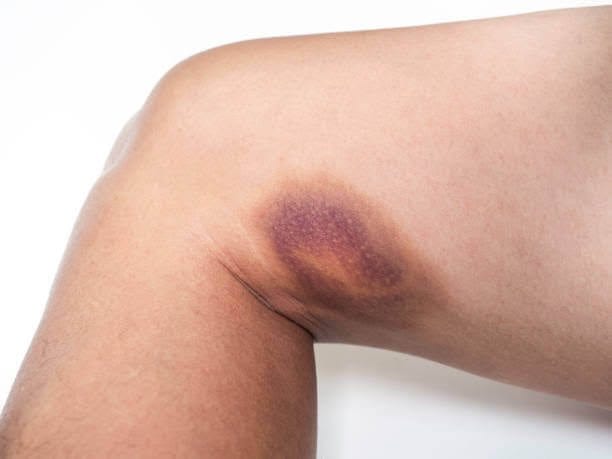
Rare complications: hematoma and how it's managed
A haematoma is a collection of blood under the skin, and it is an uncommon but recognised complication of hair transplant surgery.
A haematoma is a collection of blood under the skin, and it is an uncommon but recognised complication of hair transplant surgery. Small ones settle on their own; larger ones need drainage, and the signs that distinguish them from ordinary swelling are worth knowing.
What is a haematoma after a hair transplant?
A haematoma is bleeding that collects in a pocket under the skin instead of dispersing. It most often affects the donor area, particularly after strip surgery where a larger wound is closed, though it can occur elsewhere. It is uncommon, but recognising it turns a frightening event into a simple phone call.
How can you tell a haematoma from normal post-transplant swelling?
A haematoma feels firm and localised, like a defined lump, while ordinary swelling is diffuse and boggy. It is often one-sided rather than symmetrical, increasingly painful, and keeps growing instead of settling after the usual day two to four swelling peak, and it shows visible bruising over it.
- Firm rather than soft. Ordinary post-operative swelling is diffuse and boggy; a haematoma feels like a defined lump.
- Localised rather than spread out.
- Often one-sided, where normal swelling is symmetrical.
- Painful, and often increasingly so.
- Growing, rather than settling after the day two to four peak.
- Discoloured, with bruising over it.
How is a haematoma after a hair transplant managed?
Small haematomas are usually just observed and reabsorb over days to weeks, while larger or expanding ones are drained by a clinician, since leaving them risks pressure on tissue and infection. Clinics may apply pressure dressings and review any anticoagulant medication with the prescribing doctor. This is managed by the clinic, not at home.
- Small collections are usually observed and reabsorb over days to weeks.
- Larger or expanding collections are drained by a clinician; leaving a large haematoma risks pressure on tissue and infection.
- Pressure dressings may be applied.
- Review of any anticoagulant medication with the prescribing doctor.
This is a clinic job. It is not something to address at home.
How can you reduce the risk of a haematoma after a hair transplant?
Lower the risk by disclosing all medication and supplements that affect bleeding, never stopping a prescribed anticoagulant without your doctor's instruction, following the clinic's advice on alcohol and strenuous activity in the first days, keeping blood pressure controlled if you are hypertensive, and reporting any increasing, firm, one-sided swelling promptly.
- Disclose all medication and supplements, particularly anything affecting bleeding
- Never stop a prescribed anticoagulant without the prescribing doctor's instruction
- Follow instructions on alcohol and strenuous activity in the first days
- Keep blood pressure controlled if you are hypertensive
- Report increasing, firm, one-sided swelling promptly
Ordinary recovery, by contrast, is described step by step in our aftercare guide.
Sources
- Bernstein RM, Rassman WR. Graft Anchoring in Hair Transplantation. Dermatologic Surgery, 2006;32(2):198-204. pubmed.ncbi.nlm.nih.gov/16442039
This article summarises published research and standard clinical practice. It is general educational information, not medical advice, and it does not replace the instructions your own surgical team gives you. Where their guidance differs from anything here, follow theirs.
Get a no-obligation assessment against fixed criteria, directly on WhatsApp.