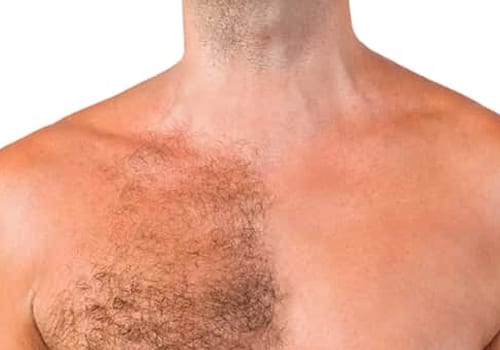
Chest and body hair as donor sources
Body hair can add donor supply in patients whose scalp and beard reserves are exhausted, and multicentre work supports its use by follicular unit excision.
Body hair can add donor supply in patients whose scalp and beard reserves are exhausted, and multicentre work supports its use by follicular unit excision. Yields and growth characteristics are less predictable than scalp or beard hair, so it is a last-line source.
When is body hair used as a donor source for hair transplants?
Body hair is a last-resort donor source, used only when the scalp and beard together cannot meet a plan's needs — in advanced hair loss, repair cases where prior surgery depleted the scalp, or patients with low donor density. Chest hair is used most often, since it is abundant and scars are easily hidden.
What does published research say about body hair transplantation?
The main evidence is a 2024 multicentre study (Umar et al., Dermatologic Surgery) on beard and body hair transplantation by follicular unit excision using a skin-responsive device. It establishes that body hair FUE is feasible as a supplementary donor source, but not that it equals scalp hair — no serious account claims that.
Why does transplanted body hair behave differently from scalp hair?
Body hair behaves differently for biological reasons: it has a shorter anagen phase that travels with the follicle, so transplants reach a shorter maximum length than scalp hair; more of it rests in telogen; it is often curlier; it grows almost entirely as single-hair units; and survival after transfer is less predictable.
The differences are biological rather than technical, and they set the limits of what body hair can do.
- Shorter anagen phase. Body hair spends less time in its growth phase than scalp hair, which is why it does not grow to scalp length on the body. That property largely travels with the follicle, so transplanted body hair typically reaches a shorter maximum length than scalp hair.
- Higher telogen proportion. A greater share of body hair is resting at any given moment, which affects both what is extractable on the day and how the transplanted hair behaves.
- Texture and curl. Body hair is frequently curlier and of different calibre from scalp hair.
- Almost entirely single-hair units. Graft counts translate to lower hair counts than scalp grafts.
- Less predictable yield. Survival after transfer is generally reported as more variable than for scalp hair, and individual response varies considerably.
Why is body hair extraction technically more difficult than scalp extraction?
Body hair extraction is technically harder than scalp extraction because follicles are shallower, more acutely angled, often curved, and the skin behaves differently under the punch, raising transection risk and lowering grafts obtainable per hour. Patients should ask how many body hair cases a surgeon has performed and to see twelve-month results.
Where is body hair placed in a transplant plan, and where is it avoided?
Body hair is placed only where bulk matters and fine detail does not — the crown and mid-scalp, blended beneath scalp hair — and never at the hairline, since unpredictable length, different texture and single-hair units make it unsuitable there. It supplements a plan by adding density behind the frontal zone, not a foundation for one.
The same logic as beard hair applies, more strongly. Body hair is placed where bulk matters and fine detail does not — the crown and mid-scalp, usually beneath or blended with scalp hair.
It is not used at the hairline. The combination of unpredictable length, different texture and single-hair units makes it unsuitable for the region where the result is judged.
A realistic framing is that body hair adds density behind the visible frontal zone in patients who would otherwise have insufficient coverage. It is a supplement to a plan, not a foundation for one.
What questions should patients ask before agreeing to body hair transplantation?
Patients should ask why body hair is needed and what exhausted the scalp and beard reserve, how many body hair cases the surgeon has performed with twelve-month results to review, what yield to expect if it underperforms, where the grafts will be placed, and what the chest donor sites will look like afterwards.
- Why is body hair needed — what has exhausted the scalp and beard reserve?
- How many body hair cases have you performed, and can I see twelve-month results?
- What yield do you expect, and what happens if it is lower?
- Where will these grafts be placed, and what will the texture difference look like?
- What will the donor sites on my chest look like afterwards?
If body hair is being proposed for a patient whose scalp donor supply has not been exhausted, the more important question is why the plan is that large in the first place.
The scalp donor is still the reserve that governs planning; see donor supply.
Sources
- Umar S, Khanna R, Maldonado JC, Chouhan K, Gonzales A. Beard and Body Hair Transplantation by Follicular Unit Excision Using a Skin-Responsive Device: A Multicenter Study. Dermatologic Surgery, 2024;50(3):306-308. pubmed.ncbi.nlm.nih.gov/38127669
- Zhu DC, He Y, Fan ZX, Wang J, Qu Q, Hu ZQ, Miao Y. Large-Scale Beard Extraction Enhances the Cosmetic Results of Scalp Hair Restoration in Advanced Androgenetic Alopecia in East Asian Men: A Retrospective Study. Dermatology and Therapy, 2020;10(1):151-161. pubmed.ncbi.nlm.nih.gov/31784942
- Zhao Y, Zhang J, Jiang B, Fan Z, Miao Y. Development of an Evaluation System to Classify Beard Donor Area for Hair Transplantation. Dermatologic Surgery, 2025;51(9):882-886. pubmed.ncbi.nlm.nih.gov/40323042
- Romera de Blas C, Vega Díez D, Ricart Vayá JM, Gómez Zubiaur A. Complications in follicular unit excision hair transplantation: current evidence and practical approaches. Frontiers in Medicine, 2026;13:1750989. pubmed.ncbi.nlm.nih.gov/41709896
This article summarises published research and standard clinical practice. It is general educational information, not medical advice, and it does not replace the instructions your own surgical team gives you. Where their guidance differs from anything here, follow theirs.
Get a no-obligation assessment against fixed criteria, directly on WhatsApp.