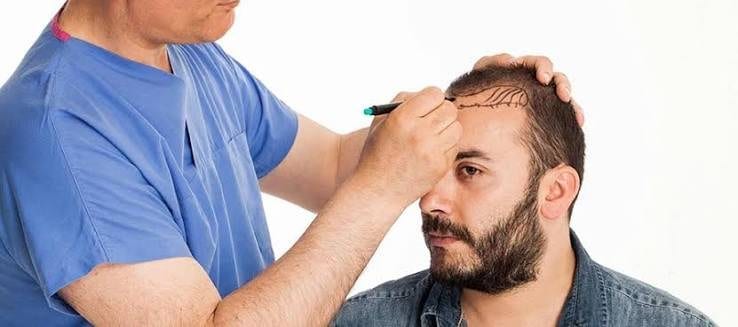
Mega sessions: risks and benefits of 3 000+ grafts
Large single sessions cover more area in one trip, but every additional graft lengthens the operation, and the grafts extracted first wait longest outside the body.
Large single sessions cover more area in one trip, but every additional graft lengthens the operation, and the grafts extracted first wait longest outside the body. Session size is therefore a graft survival variable, not merely a scheduling convenience.
What's the appeal of a mega session?
A mega session appeals because it means one trip, one recovery and one set of travel costs, faster progress toward the final goal, better blending across a large area than piecemeal work achieves, and typically a lower total cost per graft under most clinic pricing structures.
- One trip, one recovery, one set of travel costs
- Faster progress toward the final goal
- Better blending across a large area than piecemeal work
- Lower total cost per graft in most pricing structures
What mechanism limits how large a session can be?
Session size is limited because a graft has no blood supply between extraction and placement, and survival falls with hours elapsed, roughly one percent per hour as a rough approximation. Grafts taken first in a long, several-thousand-graft session wait longest, which is why team size and organisation matter as much as surgeon skill.
What donor constraint limits mega sessions?
The other limit on mega sessions is donor supply: measured density and safe zone area set a lifetime ceiling, and because pattern loss usually continues, capacity must be reserved for future sessions. A clinic promising an unusually high one-day count should be asked how that number was derived, and what is left afterward.
What questions should you ask before a mega session?
Before a mega session, ask what the expected out-of-body time is for the first grafts extracted, how many people will be placing grafts, whether splitting the work across two sessions would improve survival and what that would cost, and what proportion of your donor capacity the session actually uses.
- What is the expected out-of-body time for the first grafts extracted?
- How many people will be placing grafts?
- Would splitting this across two sessions improve survival, and what would it cost?
- What proportion of my donor capacity does this use?
Our article on out-of-body time and graft survival covers the evidence.
Sources
- Bernstein RM, Rassman WR. Graft Anchoring in Hair Transplantation. Dermatologic Surgery, 2006;32(2):198-204. pubmed.ncbi.nlm.nih.gov/16442039
- Parsley WM, Perez-Meza D. Review of factors affecting the growth and survival of follicular grafts. Journal of Cutaneous and Aesthetic Surgery, 2010;3(2). jcasonline.com
This article summarises published research and standard clinical practice. It is general educational information, not medical advice, and it does not replace the instructions your own surgical team gives you. Where their guidance differs from anything here, follow theirs.
Get a no-obligation assessment against fixed criteria, directly on WhatsApp.