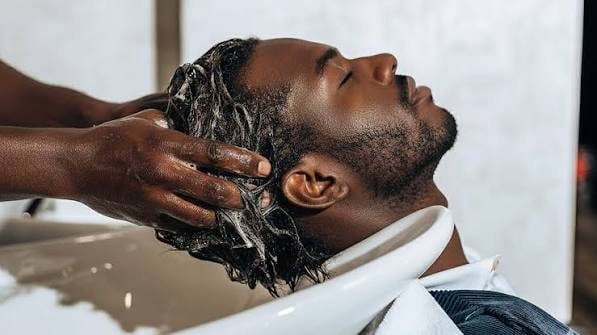
Correct washing technique in the first two weeks
Foam, a gentle rinse and no towel: the method is simple, and each step has a reason.
The washing technique used in the first fortnight is designed to do one thing: soften and release crusts without applying force to the graft underneath. Foam applied by hand, low-pressure rinsing and no towel contact are the whole method.
Why is the washing technique after a hair transplant so gentle?
Every element of the standard washing protocol exists to avoid one thing: mechanical force on a graft that is not yet anchored. Research on graft anchoring found that pulling an adherent crust could dislodge a graft through day five, so the technique is built around never gripping or dragging a crust.
What are the steps for washing your hair correctly after a hair transplant?
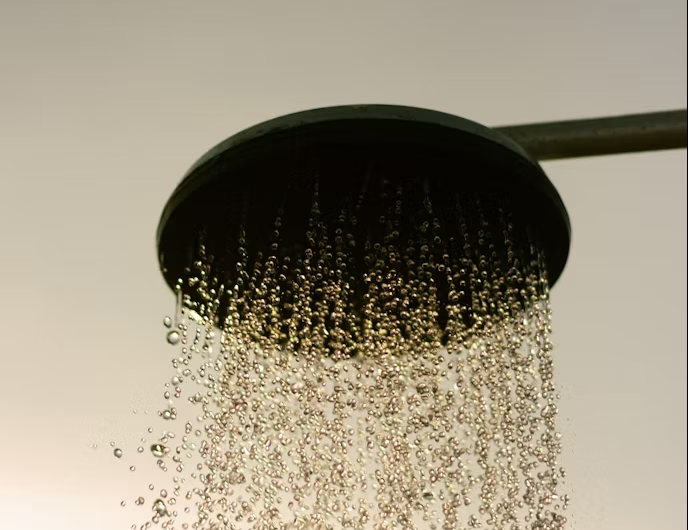
Lather prescribed shampoo into foam between your palms, apply it to the recipient area with flat fingertips and no pressure, let it sit so crusts soften, rinse with a cup pour or low-pressure flow (never a direct jet), wash the donor area slightly more normally, and pat dry or air dry without rubbing.
- Prepare. Lukewarm water. Lather the prescribed shampoo between your palms until it is foam.
- Apply. Place the foam onto the recipient area with flat fingertips. No circular motion, no pressure, no nails.
- Leave. Let it sit for the time your clinic specifies so crusts soften.
- Rinse. Pour with a cup or use a low-pressure flow from a distance. Never aim a jet at the grafts.
- Donor area. This can usually be washed slightly more normally, but still gently.
- Dry. Pat with a clean towel or let it air dry. No rubbing.
What are the most common hair-washing mistakes after a transplant?
Common washing mistakes include aiming the shower head directly at the recipient area, using hot water (which softens skin and increases bleeding), rubbing to remove crusts faster, reusing a towel that touched the recipient area, using regular shampoo, conditioner or styling products too early, and washing less often than instructed, which lets crusts harden.
- Aiming the shower head directly at the recipient area
- Using hot water, which softens skin and increases bleeding
- Rubbing to remove crusts faster
- Reusing a towel that has been used on the recipient area
- Using regular shampoo, conditioner or styling products too early
- Washing less often than instructed, which lets crusts harden
How does the hair-washing routine change as healing progresses?
As crusts clear through the second week, washing becomes progressively more normal. Grafts are no longer at risk of dislodgement from around day nine, so the constraint after that point is skin healing rather than graft security. Follow your clinic's schedule for reintroducing normal shampoo.
Sources
- Bernstein RM, Rassman WR. Graft Anchoring in Hair Transplantation. Dermatologic Surgery, 2006;32(2):198-204. pubmed.ncbi.nlm.nih.gov/16442039
This article summarises published research and standard clinical practice. It is general educational information, not medical advice, and it does not replace the instructions your own surgical team gives you. Where their guidance differs from anything here, follow theirs.
Get a no-obligation assessment against fixed criteria, directly on WhatsApp.