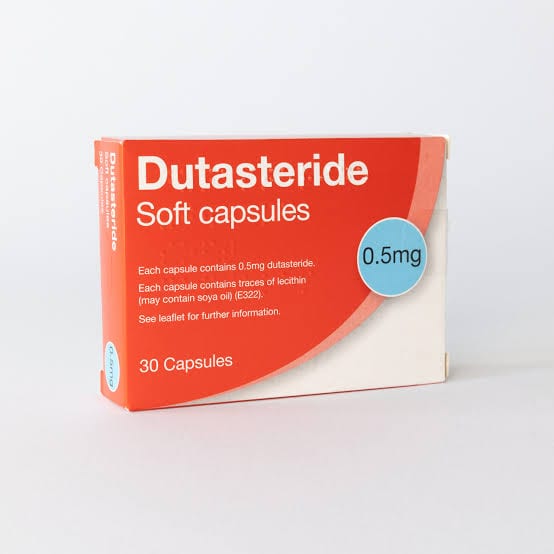
Dutasteride vs Finasteride
Dutasteride inhibits both type I and type II 5-alpha reductase where Finasteride inhibits only type II, so it suppresses DHT more completely.
Dutasteride inhibits both type I and type II 5-alpha reductase where Finasteride inhibits only type II, so it suppresses DHT more completely. Meta-analysis suggests better hair counts, with broadly comparable rates of sexual side effects.
What is the pharmacological difference between Dutasteride and Finasteride?
There are two relevant forms of 5-alpha reductase: Finasteride inhibits only type II, while Dutasteride inhibits both type I and type II, producing a greater overall reduction in DHT. Dutasteride also has a much longer half-life than Finasteride, meaning it clears from the body far more slowly after stopping.
What does the evidence show when comparing Dutasteride and Finasteride for hair growth?
A meta-analysis of three studies (576 participants) found Dutasteride increased total hair count by 28.57 hairs more than Finasteride, a statistically significant difference, with photographic assessment also favouring Dutasteride at the vertex and frontal areas. A separate meta-analysis found Dutasteride gave 7.1 more hairs per cm² than Finasteride at 24 weeks.
A systematic review and meta-analysis of three studies including 576 participants found Dutasteride produced a mean increase in total hair count of 28.57 hairs more than Finasteride, a statistically significant difference. It also found significant differences favouring Dutasteride in investigator assessment of global photographs at both the vertex and frontal areas.
A separate meta-analysis reported Dutasteride 0.5 mg daily giving 7.1 more hairs per cm² than Finasteride 1 mg daily at 24 weeks.
The direction is consistent: Dutasteride appears more effective. The size of the advantage varies by study and endpoint.
How does the safety profile of Dutasteride compare with Finasteride?
Safety data on the two drugs show similar rates of adverse reactions, with no significant difference in altered libido, erectile dysfunction or ejaculation disorders. However, Dutasteride's much longer half-life means that if a side effect does occur, it takes considerably longer to clear, a meaningful practical difference even when reported rates look similar.
What is the regulatory status of Dutasteride versus Finasteride for hair loss?
Finasteride 1 mg is approved for androgenetic alopecia in many countries. Dutasteride is approved for it in some markets and used off-label elsewhere, where it is more commonly licensed for benign prostatic hyperplasia. Which is appropriate is a prescribing decision that should weigh age, plans for fathering children and tolerance of a longer washout.
Both sit within the wider set of non-surgical options.
Sources
- Zhou Z, et al. The efficacy and safety of Dutasteride compared with Finasteride in treating men with androgenetic alopecia: a systematic review and meta-analysis. Clinical Interventions in Aging, 2019. pubmed.ncbi.nlm.nih.gov/30863034
- Gupta AK, Venkataraman M, Talukder M, Bamimore MA. Finasteride for hair loss: a review. Journal of Dermatological Treatment, 2022;33(4):1938-1946. pubmed.ncbi.nlm.nih.gov/34291720
This article summarises published research. It is general educational information, not medical advice, and it is not a recommendation to start, stop or change any medication. Prescription drugs carry contraindications and interactions; discuss them with a doctor who knows your medical history.
Get a no-obligation assessment against fixed criteria, directly on WhatsApp.