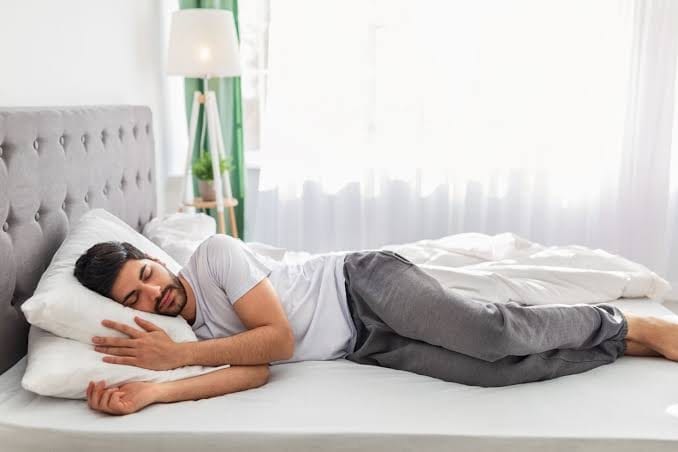
When you can sleep on your side again
The answer depends on the calendar and on where your grafts are: someone who had only the hairline done can often turn over sooner.
Sleeping position matters because the recipient area must not be pressed or dragged while grafts can still be dislodged. Research on graft anchoring found grafts were secure by day nine, and most clinics allow normal sleeping positions from around then, with side sleeping often possible earlier if the grafted zone is not in contact.
What is the sleep restriction after surgery protecting against?
The restriction protects against pressure and friction on grafts not yet anchored. Research on graft anchoring found pulling a hair dislodged a graft through the first two days, an adherent crust could still cost a graft through day five, and grafts were secure by day nine. Sleep is when that risk is hardest to control.
What is the usual guidance for sleeping position after a hair transplant?
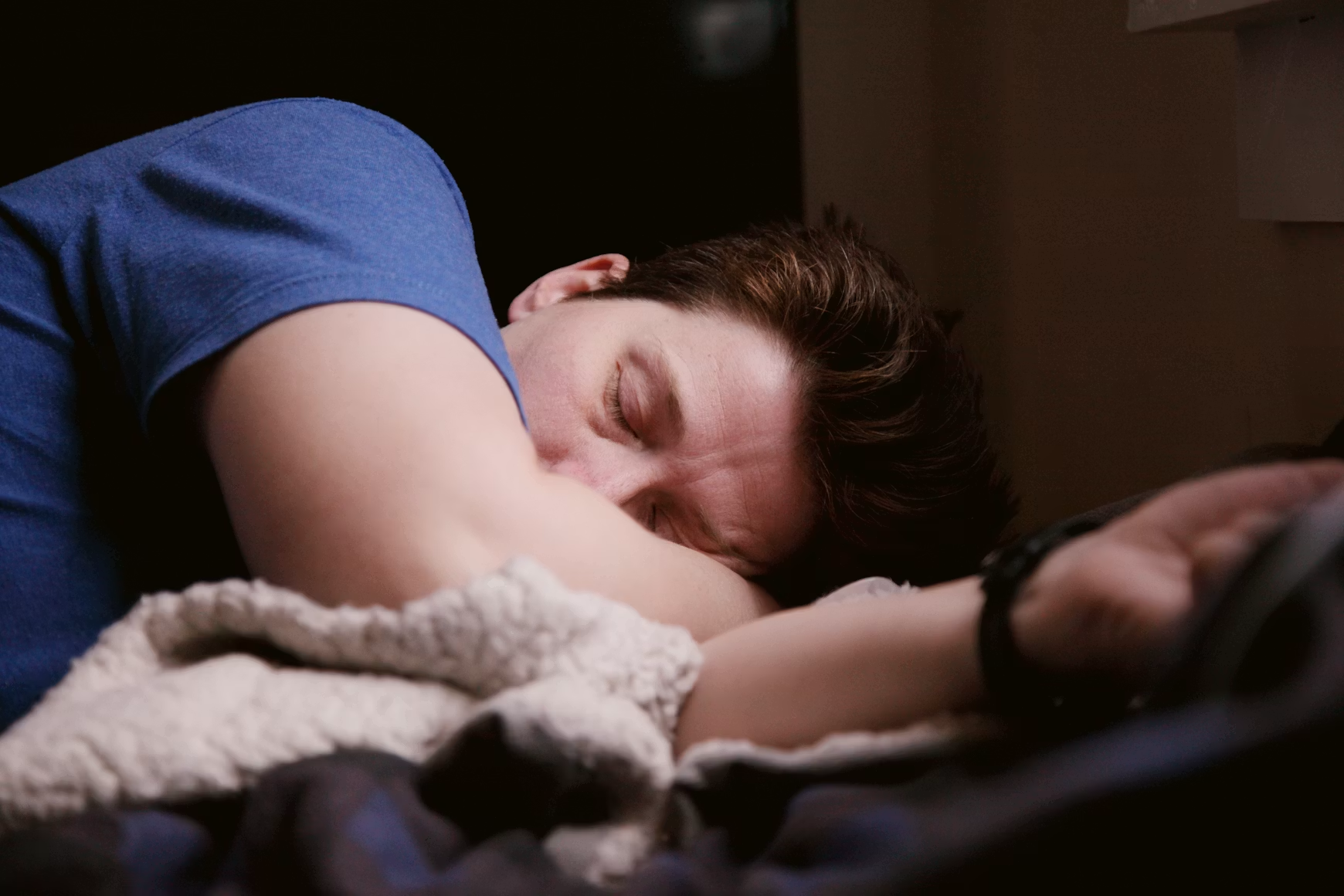
Most clinics advise sleeping on your back with the head elevated for nights one to five, continuing to prefer back sleeping through night nine, with side sleeping sometimes tolerated if no grafted area touches the pillow. From around day nine or ten, normal positions including sides are usually allowed. Face-down sleeping returns last.
- Nights 1 to 5: on your back, head elevated. This also limits swelling.
- Nights 5 to 9: back sleeping still preferred; side sleeping tolerated by some clinics if no grafted area touches the pillow.
- From around day 9 to 10: most clinics allow normal positions, including sides.
- Face-down sleeping: last to return, and the position most likely to drag across grafts.
Does the sleeping-position timeline apply the same way to everyone?
No. Someone with a hairline-only procedure has nothing in contact with the pillow when lying on their side, while someone with extensive temple and side work does. The general timeline is a starting point rather than a personal answer, so ask your clinic what applies to your graft pattern.
What practical measures help protect grafts while sleeping?
A travel pillow keeps the back of the head off the mattress and discourages rolling onto the grafts. Elevation for the first several nights reduces swelling, the pillowcase should be changed regularly, and sedating substances that make you sleep heavily and roll over are best avoided.
- A travel pillow keeps the back of the head off the mattress and discourages rolling
- Elevation for the first several nights reduces swelling
- A clean pillowcase changed regularly
- Avoiding sedating substances that make you sleep heavily and roll
Sleeping position is one of several early restrictions, all listed in the aftercare guide.
Sources
- Bernstein RM, Rassman WR. Graft Anchoring in Hair Transplantation. Dermatologic Surgery, 2006;32(2):198-204. pubmed.ncbi.nlm.nih.gov/16442039
This article summarises published research and standard clinical practice. It is general educational information, not medical advice, and it does not replace the instructions your own surgical team gives you. Where their guidance differs from anything here, follow theirs.
Get a no-obligation assessment against fixed criteria, directly on WhatsApp.