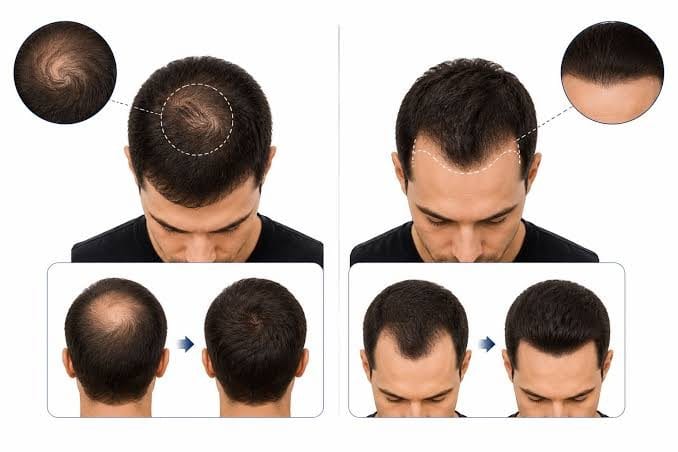
Choosing graft distribution: hairline vs crown priority
Donor supply is finite, so grafts spent on the crown are grafts not spent on the hairline.
Donor supply is finite, so grafts spent on the crown are grafts not spent on the hairline. Most surgeons prioritise the frontal region because it frames the face and delivers more visible improvement per graft, and that reasoning is usually sound.
Why does the frontal hairline usually take priority over the crown?
The frontal hairline usually wins for four reasons: it frames the face and is what people notice, the region is flatter and smaller so fewer grafts achieve more, a restored hairline stays sensible-looking as loss progresses behind it, and frontal hair can be styled back to suggest coverage further back, but not the reverse.
- Framing. The hairline frames the face and is what people see when looking at you.
- Grafts per visible effect. The frontal region is flatter and smaller than the crown, so fewer grafts achieve more.
- Stability. A restored hairline continues to look sensible as loss progresses behind it.
- Styling. Frontal hair can be combed back to give an impression of coverage further back; the reverse is not true.
Why is the crown a riskier area to graft early?
Crown loss keeps expanding outward for years, so a crown grafted at thirty-five can end up ringed by a widening bald area by forty-five, looking worse than if untreated and needing further grafts to fix. The crown is also a curved surface seen from above, so scalp shows through more readily and needs more density.
When is it reasonable to graft the crown?
Grafting the crown is reasonable when hair loss is established and stable, typically in older patients; when donor supply is genuinely generous; when the hairline has already been addressed; when the patient accepts partial rather than full coverage; and when medical treatment has stabilised the surrounding area.
- Loss is established and stable, typically in older patients
- Donor supply is genuinely generous
- The hairline is already addressed
- The patient accepts partial coverage rather than full restoration
- Medical treatment has stabilised the surrounding area
What should you ask your surgeon when deciding on crown treatment?
Ask your surgeon to state your measured donor capacity as a number, show how they would allocate it across regions, and specify what is held back for later. A surgeon who declines to graft your crown and explains why is giving you better advice than one who simply agrees to everything you request.
Our crown guide covers the specifics.
Sources
- Parsley WM, Perez-Meza D. Review of factors affecting the growth and survival of follicular grafts. Journal of Cutaneous and Aesthetic Surgery, 2010;3(2). jcasonline.com
This article summarises published research and standard clinical practice. It is general educational information, not medical advice, and it does not replace the instructions your own surgical team gives you. Where their guidance differs from anything here, follow theirs.
Get a no-obligation assessment against fixed criteria, directly on WhatsApp.